
November 16, 2026
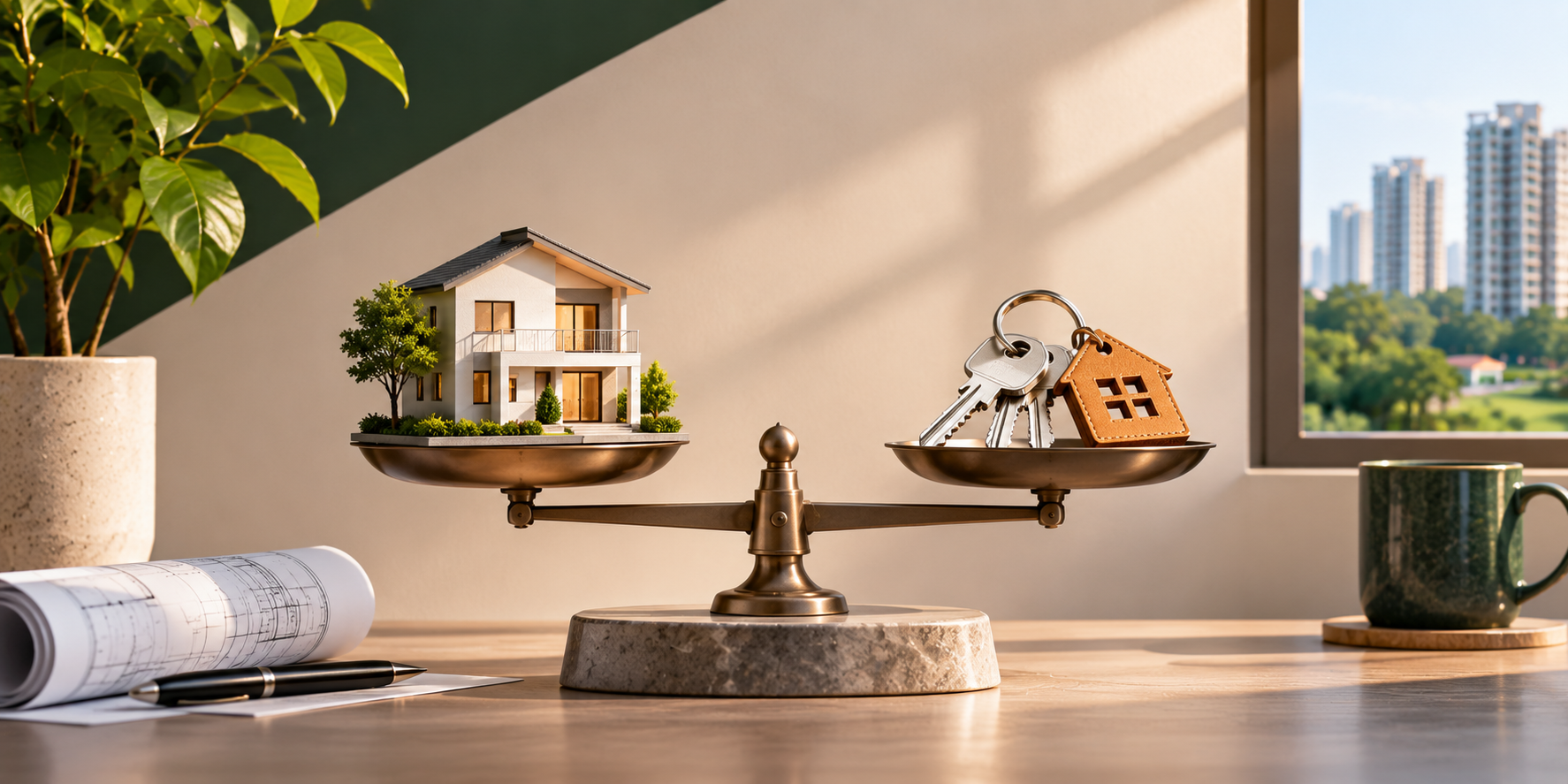
Explore whether renting or buying makes more financial sense in Delhi NCR. Compare costs, property appreciation and long-term benefits to make an informed home-buying decision with practical real estate advice for 2026.
Choosing between renting and buying a home is an important financial decision. This real estate advice guide compares the costs, benefits and risks of renting versus buying in Delhi NCR. The right choice depends on your income, career stability, savings and long-term housing plans.
Renting generally suits people who value flexibility and want to avoid large upfront expenses. Buying, however, can build long-term equity and provide residential stability. Therefore, evaluate the complete cost of ownership rather than comparing monthly rent with an EMI alone.
| Factor | Renting | Buying |
|---|---|---|
| Initial cost | Security deposit and brokerage, where applicable. | Down payment, stamp duty, registration and loan charges. |
| Monthly expense | Rent and maintenance, depending on the agreement. | EMI, maintenance, property tax and other ownership expenses. |
| Flexibility | Easier relocation and fewer long-term commitments. | Reselling or relocating can involve additional costs. |
| Long-term value | No ownership equity in the rented property. | Potential equity through loan repayment and property appreciation. |
| Responsibility | Major structural repairs generally depend on the rental agreement. | Owner handles property upkeep and ownership responsibilities. |
For example, Delhi charges stamp duty of 4% for women and 6% for men, plus a 1% registration fee. Therefore, on a ₹1 crore property, these charges amount to approximately ₹5–7 lakh, excluding other expenses. Rates and valuation rules differ across NCR states. Check the Delhi government's property registration guidelines before purchasing.
Delhi NCR has experienced substantial residential price growth. According to PropEquity data reported by Hindustan Times, new residential project prices across NCR increased by 137% between September 2019 and September 2024. Ghaziabad recorded 139% growth, while Gurugram recorded 135%.
However, historical appreciation does not guarantee future returns. Location, construction quality, developer credibility and actual buyer demand influence individual property performance. Buyers considering a flat for sale in Ghaziabad should compare locality-level prices and project documentation before investing.
Explore the best areas to buy a flat in Delhi NCR to evaluate residential locations.
For buyers exploring residential projects, consider Divyansh Flora and Divyansh Fabio as additional properties to research.
Renting usually requires less initial capital. Buying can offer long-term ownership benefits, but EMIs, interest, registration and maintenance increase the total cost.
There is no universal percentage. Consider your existing loans, household expenses, savings goals and emergency fund before deciding on an affordable EMI or rent.
Buying generally becomes more practical when you expect to stay for several years. Calculate your break-even period using transaction costs, interest, maintenance and potential resale value.
Consider stamp duty, registration, brokerage, loan processing fees, maintenance deposits, property taxes, interior work and possible repair expenses.
Eligible homebuyers may claim certain home-loan deductions under the old tax regime. HRA exemptions may also benefit eligible tenants. However, tax benefits depend on individual eligibility and the selected tax regime. Consult the Income Tax Department's guidance.